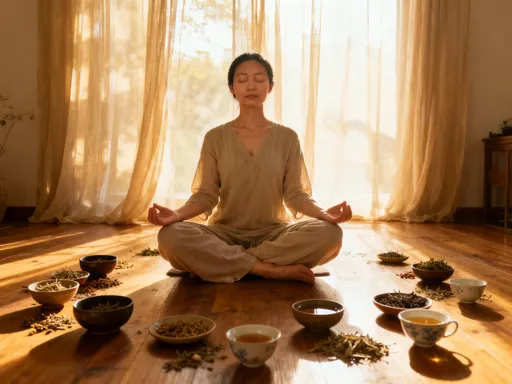
What I Learned from Yoga Meditation and TCM Diet Mistakes
I used to think combining yoga meditation with traditional Chinese medicine (TCM) wellness meant quick results and strict food rules. But after going too far with dietary restrictions, I felt drained and confused. It wasn’t until I stepped back that I saw the real pitfalls—extreme eating habits, ignoring body signals, and mistaking discipline for health. This journey taught me balance is everything. Here’s what really works when blending mind practice with mindful eating.
The Allure of Combining Yoga, Meditation, and TCM Wellness
For many women in their 30s to 50s, the search for lasting well-being often leads to holistic paths that promise more than physical health—they offer emotional calm, mental clarity, and a sense of control in busy lives. Yoga and meditation have become trusted allies in this pursuit, offering daily moments of stillness amid family responsibilities, career demands, and personal transitions. At the same time, traditional Chinese medicine has gained widespread appreciation for its focus on balance, energy flow, and prevention. The idea of aligning breathwork with dietary wisdom from ancient traditions feels deeply intuitive—like returning to a natural rhythm that modern life has disrupted.
The appeal lies in the promise of harmony. Meditation cultivates inner peace; yoga strengthens the body-mind connection; TCM addresses root imbalances rather than symptoms. When combined, they form what seems like a complete system: align your energy with qigong or tai chi, calm your nervous system with seated breathwork, and support it all with food that nurtures your constitution. Many begin with genuine intentions—improving digestion, reducing fatigue, managing stress, or finding emotional equilibrium during perimenopause or after raising children. The initial results can be encouraging: better sleep, reduced bloating, or a quieter mind.
But enthusiasm, when unchecked, can lead to overcorrection. Some assume that if a little discipline brings benefit, more must bring greater results. This mindset sets the stage for rigid routines—meditating for hours, eliminating entire food groups, or treating wellness as a moral test. The goal of feeling better slowly shifts into an obligation to be perfect. What begins as self-care risks becoming self-punishment, where deviation from a strict regimen feels like failure. The irony is that the very practices meant to create freedom—yoga, meditation, mindful eating—can become sources of anxiety when misapplied.
My First Big Mistake: Turning Dietary Restrictions into Rules
My own journey down this path started with good intentions. After reading about TCM principles, I began adjusting my diet based on seasonal changes and my body type, which a wellness practitioner had labeled as “cold and damp.” I learned that certain foods—like raw vegetables, dairy, and tropical fruits—were considered “cooling” and potentially harmful to digestion if consumed in excess. So I eliminated them. Then I removed gluten, then nightshades, then anything processed. Soon, my meals consisted mostly of steamed root vegetables, ginger tea, and small portions of warm grain porridge. I believed I was healing my spleen and supporting my qi, the vital energy central to TCM.
At first, I felt a sense of accomplishment. I was disciplined. I was “clean.” But within weeks, my energy dropped. I felt cold even in summer. My sleep became restless, and I found myself distracted at work, unable to focus. I was eating what I believed to be the purest foods, yet I felt weaker, not stronger. My yoga practice, once a source of strength and release, became strained. I struggled to hold poses I’d once done easily. Meditation, which used to bring calm, now felt like another arena where I judged myself for not being “present enough” or “detached enough” from hunger.
The turning point came when I fainted during a gentle restorative class. It wasn’t dramatic—just a sudden dizziness, a moment of blacking out while lying in supported child’s pose. The teacher gently suggested I eat something substantial before class. That small comment cracked open my rigid mindset. I realized I had turned nourishment into fear. Every meal had become a calculation: was this food warming? Was it easy to digest? Would it disrupt my balance? I wasn’t listening to my body’s actual needs—only to a set of rules I had internalized as absolute. The peace I sought through yoga and TCM was being eroded by the very habits I thought would bring it.
Pitfall #1: Misunderstanding TCM Dietary Principles
Traditional Chinese medicine offers a rich, nuanced understanding of health, where food is medicine and digestion is the foundation of vitality. Unlike Western nutrition, which often focuses on macronutrients and calories, TCM emphasizes the energetic properties of food—its temperature (warming, cooling, neutral), its effect on organ systems, and its role in maintaining the balance of yin and yang. For example, someone with a “cold” constitution might benefit from warming foods like cooked root vegetables, cinnamon, and bone broth, while someone with excess heat might do better with cooling foods like cucumber, mung beans, or peppermint tea.
However, these principles are meant to be applied with flexibility and personalization. One of the most common misunderstandings is treating TCM dietary advice as universal law rather than individual guidance. Many wellness blogs and social media posts present statements like “bananas are cold and damage the spleen” or “drink warm water only” as absolute truths. But in authentic TCM practice, recommendations are made after a thorough assessment by a trained practitioner, considering pulse, tongue diagnosis, lifestyle, and current symptoms. A food that is inappropriate for one person may be perfectly suitable for another.
Another issue is the oversimplification of concepts like “dampness” or “phlegm,” which in TCM refer to metabolic sluggishness or fluid retention, not literal mucus. When people interpret these terms too literally, they may unnecessarily eliminate nutritious foods—like yogurt or fruit—without understanding their actual impact. Furthermore, TCM was developed in a different agricultural and environmental context. Modern food quality, lifestyle stress, and exposure to environmental toxins mean that blanket applications of ancient guidelines can sometimes do more harm than good.
The key is discernment. TCM wisdom is valuable, but it was never meant to replace personal experience or professional medical insight. Self-diagnosing imbalances based on internet quizzes or generalized descriptions can lead to misguided restrictions. True balance in TCM comes not from fear-based elimination, but from observing how your body responds and adjusting accordingly—with guidance when needed.
Pitfall #2: Using Yoga and Meditation to Justify Extreme Habits
One of the most subtle yet dangerous traps in holistic wellness is the misuse of spiritual practices to rationalize harmful behaviors. Yoga and meditation are powerful tools for self-awareness, but they can also be twisted into mechanisms of control. In my case, I began using meditation not to observe my hunger, but to suppress it. I would sit quietly, focus on my breath, and tell myself that true discipline meant rising above physical needs. I believed that if I could meditate through hunger, I was becoming more enlightened. I equated restriction with purity and equated purity with worth.
This phenomenon, known in psychology as spiritual bypassing, occurs when people use spiritual ideas to avoid dealing with unresolved emotional issues. Instead of asking why I felt compelled to restrict food, I told myself I was “cleansing” or “raising my vibration.” I ignored the fact that my relationship with food was becoming rigid and joyless. I didn’t see that my meditation practice was no longer about presence—it was about performance. I was not cultivating peace; I was cultivating denial.
Yoga, too, was being misused. I pushed myself into advanced poses despite fatigue, believing that discomfort was a sign of progress. I compared my practice to others, even though I had started yoga to reduce comparison, not reinforce it. The physical practice, which should have been grounding, became another arena for self-criticism. When I couldn’t touch my toes, I felt like a failure. When I ate a piece of cake at a family gathering, I felt like I had broken a sacred vow.
The danger lies in how easily wellness culture can glorify extremes. Social media often celebrates those who eat the “cleanest,” meditate the longest, or practice the most challenging ashtanga sequences. But true wellness is not measured by how much you can endure. It is measured by how well you can live—with energy, connection, and joy. When yoga and meditation are used to justify deprivation, they cease to be healing practices and become tools of self-alienation.
Pitfall #3: Ignoring Modern Nutrition Science
While traditional Chinese medicine offers valuable insights into digestion, energy, and seasonal living, it does not always account for the nutritional science we now understand through research. For example, TCM does not recognize specific micronutrients like vitamin B12, iron, or omega-3 fatty acids—yet deficiencies in these can lead to fatigue, hair loss, mood changes, and cognitive decline, especially in women over 40. I learned this the hard way when blood tests revealed low iron and borderline B12 levels, despite eating what I thought was a balanced, plant-based TCM-aligned diet.
Modern nutrition emphasizes the importance of bioavailability, nutrient density, and individual metabolic needs. It recognizes that plant-based iron (non-heme) is less easily absorbed than animal-based iron (heme), and that certain combinations—like vitamin C with plant iron—can enhance absorption. It also acknowledges the role of protein in maintaining muscle mass, especially as we age. None of these concepts are part of classical TCM frameworks, not because they are wrong, but because they were developed in a different scientific era.
Ignoring this knowledge can lead to unintended consequences. For instance, eliminating all animal products based on a belief that they are “too heating” or “create dampness” may result in inadequate protein intake, which affects skin elasticity, hormone balance, and recovery from physical activity. Similarly, avoiding all fats because they are “sluggish” can impair the absorption of fat-soluble vitamins like A, D, E, and K—essential for immune function, bone health, and hormone regulation.
The solution is not to reject TCM, but to integrate it with current scientific understanding. A balanced approach respects tradition while acknowledging new evidence. It allows for warm, cooked meals in winter while including nutrient-dense foods like eggs, fatty fish, or legumes when needed. It values the wisdom of seasonal eating but doesn’t forbid a salad in summer or a piece of dark chocolate because of a rigid classification. True wellness is not about choosing one system over another—it’s about using both to support a vibrant, sustainable life.
Finding Balance: A Smarter Way to Blend Practices
After my wake-up call, I began rebuilding my relationship with food and practice from a place of compassion rather than control. I consulted a licensed TCM practitioner and a registered dietitian to get a more complete picture of my health. I learned that I didn’t need to eliminate entire food groups—just adjust proportions and preparation methods. I could enjoy raw vegetables in moderation if paired with warming spices. I could eat fruit if it was ripe and not chilled. I could include small amounts of animal protein to support my iron levels without “overheating” my system.
I also redefined my yoga and meditation practice. Instead of using it to suppress emotions or hunger, I used it to listen. I began with short, gentle sessions focused on body scanning—asking, “What do I feel right now?” rather than “What should I do?” I practiced mindful eating, not as a way to restrict, but as a way to savor. I cooked with intention, choosing ingredients that were fresh, seasonal, and enjoyable—not just “correct.” I allowed myself to eat soup in summer if I craved it, and salad in winter if my body asked for it.
One of the most liberating shifts was letting go of perfection. I stopped tracking every bite and started noticing patterns—how certain foods affected my energy, mood, and digestion. I learned that balance doesn’t mean eating exactly 50% warming and 50% cooling foods. It means responding to your body’s changing needs. Some days call for hearty stews; others for light steamed fish and greens. Some days, meditation feels deep and clear; other days, it’s a struggle. And that’s okay.
Practical changes made a big difference. I started meal prepping with variety in mind—warm grains, colorful vegetables, plant and animal proteins, healthy fats. I used TCM principles as a guide, not a rulebook—favoring cooked foods in colder months, but not fearing a smoothie if I wanted one. I practiced yoga five times a week, but allowed for rest when needed. I meditated daily, but shortened sessions when life was busy. The goal was consistency, not intensity.
Conclusion: Wellness Without Warning Labels
Looking back, I realize that my biggest mistake was confusing rigidity with discipline. I thought that the stricter I was, the healthier I would become. But true health is not measured by how many rules you follow. It’s measured by how you feel—energized, resilient, connected, and at peace. Yoga and meditation are not meant to make life harder; they are meant to make it richer. TCM is not a diet plan; it’s a philosophy of balance.
The most valuable lesson I’ve learned is that wellness is not one-size-fits-all. What works for someone else may not work for you. Your body speaks—through hunger, fatigue, mood, digestion. The wisest thing you can do is listen. Combine ancient wisdom with modern knowledge. Respect tradition, but don’t be afraid to adapt it. Seek guidance from qualified professionals, not just influencers or blogs.
And above all, let joy be your compass. If your wellness routine feels heavy, joyless, or punishing, it’s time to reassess. True well-being feels light. It allows for cake at birthday parties, naps when tired, and laughter over shared meals. It doesn’t require perfection. It requires presence. When yoga, meditation, and mindful eating come together in a way that supports your life—not controls it—that’s when you’ve found real balance.