Where Street Art Meets Bazaar Buzz in Bishkek
You know that electric feeling when you stumble upon a city’s soul in its streets? Bishkek isn’t just concrete and cars—it’s color, texture, and rhythm. I didn’t expect to find art pulsing through its commercial veins, but from graffiti-laced alleys to hand-painted market stalls, creativity thrives where commerce does. This is art not behind glass—but alive, loud, and part of everyday trade. Let me take you where brushes meet business.
The Pulse of Osh Bazaar: Commerce as Canvas
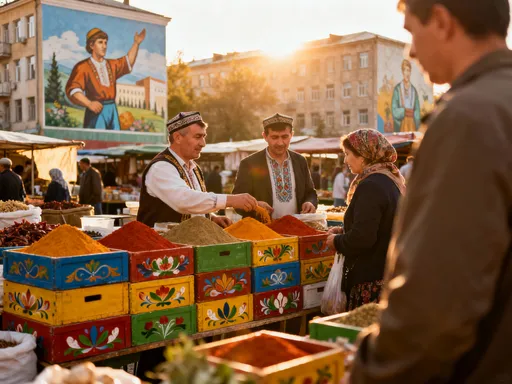
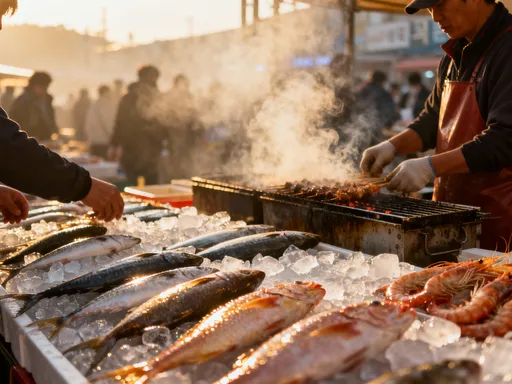
Osh Bazaar is more than a marketplace—it is a living gallery where commerce and creativity merge in vibrant harmony. As one of the largest and most historic bazaars in Central Asia, it draws thousands daily, not only for its goods but for its sensory richness. Wooden crates stacked with fruit are hand-painted with traditional Kyrgyz patterns, each swirl and dot echoing centuries-old nomadic designs. These are not mere containers; they are statements of cultural pride, quietly elevating the everyday into the artistic. The marketplace hums with rhythm—vendors call out in melodic cadences, the scent of cumin and fresh bread swirls in the air, and pyramids of dried apricots, crimson peppers, and turmeric roots resemble abstract paintings arranged by nature and nurture.
What makes Osh Bazaar unique is how artistry is embedded in function. Hand-embroidered suzanis—textile hangings made from silk or cotton—drape across stalls like museum-worthy tapestries, yet they remain accessible, priced for local families and curious travelers alike. Each stitch tells a story: the ram’s horn motif symbolizing strength and unity, the tulip representing renewal. These textiles are not relics; they are in constant circulation, passed from grandmother to daughter or sold to a young couple furnishing their first home. The bazaar does not separate the utilitarian from the beautiful; instead, it celebrates their union.
Even the arrangement of goods follows an intuitive aesthetic. Spice mounds are carefully layered, their colors forming gradients from golden saffron to deep paprika red. Glass jars of honey glow amber in the sunlight, arranged in concentric circles that catch the eye like mandalas. There are no formal curators here, yet the visual impact is deliberate and powerful. Vendors, many of whom have worked in the bazaar for decades, understand that presentation matters—not just for sales, but for dignity. To display goods with care is to honor both the craft and the customer.
This organic fusion of art and trade challenges conventional distinctions between high and low culture. In Western contexts, art is often confined to white-walled galleries, removed from daily life. In Osh Bazaar, art is inseparable from survival, celebration, and community. It is not something to be observed from a distance, but touched, bargained for, carried home. The marketplace becomes a stage where creativity is not a luxury, but a necessity—a way of asserting identity in a rapidly changing world.
Ala-Too Square: Public Space as Gallery
At the heart of Bishkek, Ala-Too Square stands as a dynamic intersection of history, politics, and visual expression. Once a symbol of Soviet authority, with its broad avenues and imposing statues, the square has evolved into an open-air gallery that reflects the city’s shifting identity. Monuments to revolutionary figures still stand, but they now share space with temporary art installations, seasonal light displays, and community-driven murals. The square is no longer a static monument to the past—it is a canvas for the present, constantly rewritten by artists, citizens, and festivals.
During national holidays and cultural events, the square transforms. Projected light shows dance across government buildings, turning facades into moving stories of Kyrgyz heritage. In winter, ice sculptures line the central walkway, their delicate forms glowing under colored lights. These installations are not mere decoration; they invite engagement. Children run between them, families take photographs, and elderly couples pause to remember older versions of the city. The square becomes a shared experience, where public art fosters connection rather than division.
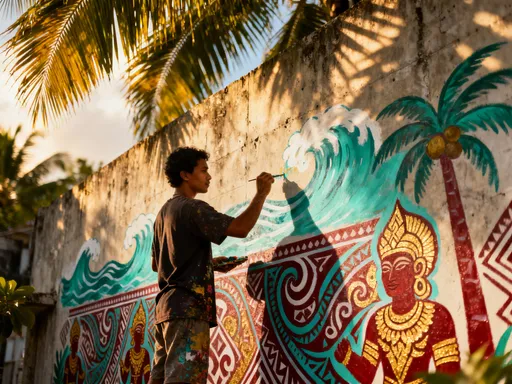
One of the most striking developments has been the emergence of youth-led graffiti projects. While early street art in Bishkek was often seen as vandalism, city officials have increasingly embraced it as a legitimate form of expression. During the annual Bishkek International Art Festival, artists are invited to paint sections of the square’s underpasses and side walls. These works often depict national symbols—a soaring golden eagle, a traditional yurt, or the peaks of the Tien Shan mountains—but rendered in contemporary styles that blend realism with abstraction. The message is clear: Kyrgyz identity is not frozen in time, but evolving.
What makes Ala-Too Square so significant is its accessibility. Unlike private galleries or ticketed exhibitions, this space belongs to everyone. A government clerk on lunch break, a tourist with a camera, a student sketching in a notebook—all experience the same art, at no cost. This democratization of culture is central to Bishkek’s artistic renaissance. Art here is not about exclusivity or elitism; it is about visibility and voice. As the city continues to grow, the square remains a vital forum for dialogue, not through speeches or protests, but through color, form, and light.
From Soviet Blocks to Street Art Hotspots
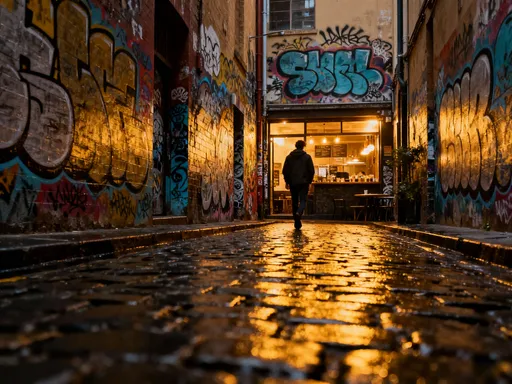
The residential neighborhoods of Bishkek, once defined by the uniformity of Soviet-era apartment blocks, are undergoing a quiet revolution. What were once gray, unadorned walls now burst with color, storytelling, and symbolism. Areas like Dzerzhinsky Prospekt and the lanes near the Philharmonic Hall have become unofficial galleries, where murals by local and international artists transform forgotten spaces into destinations. This transformation is not accidental; it is the result of a growing street art movement supported by municipal programs, cultural NGOs, and a new generation of artists eager to claim their place in the urban landscape.
Unlike the rebellious graffiti of Western cities, Bishkek’s street art is less about defiance and more about belonging. Many artists speak of a desire to “give back” to their neighborhoods, to make daily life more beautiful and meaningful. One mural in the Ak Orda district depicts a young girl in traditional dress releasing a flock of paper birds into a blue sky. It is not political, but poetic—a quiet affirmation of hope and freedom. Another, near a children’s hospital, shows a family of foxes peeking out from behind a wall, their eyes full of curiosity. These works do not shout; they whisper, inviting passersby to pause, reflect, and smile.
The city has responded by designating legal graffiti zones, where artists can work without fear of fines or removal. These zones are often located in high-traffic but underutilized areas—beneath overpasses, along bike paths, or on the sides of utility buildings. The support is not just permissive; it is proactive. The Bishkek Arts Initiative, a public-private partnership, provides materials, training, and small stipends to emerging artists. Workshops teach not only technique but also urban design principles, helping artists consider scale, visibility, and community impact.
International collaborations have also played a role. Artists from Kazakhstan, Georgia, and even France have participated in exchange programs, bringing new styles while respecting local themes. One joint project between Kyrgyz and Turkish artists resulted in a mural that blends Ottoman geometric patterns with Kyrgyz felt motifs, creating a visual dialogue between cultures. These partnerships do more than beautify walls—they build bridges, showing that art can be a language of diplomacy and understanding.
Artisan Hubs in the Heart of the City
Beyond the markets and murals, Bishkek’s creative energy pulses in its artisan hubs—small, intimate spaces where craft and commerce intertwine. Along Erkindik Boulevard, one of the city’s main thoroughfares, pop-up markets and tucked-away studios offer a different kind of shopping experience. Here, visitors don’t just buy objects—they witness their creation. In a second-floor studio above a coffee shop, a woman shapes felted wool into intricate animal figures, her hands moving with practiced ease. In another, a jeweler files delicate silver settings for handmade ceramic pendants. These spaces are not boutiques in the conventional sense; they are workshops, classrooms, and community centers rolled into one.
The Bishkek Design Market, held monthly in a renovated Soviet-era cultural center, exemplifies this blend. Dozens of artisans display their work—handwoven scarves, embroidered bags, ceramic tableware, and leather-bound journals. Prices are modest, reflecting a commitment to accessibility. Many creators emphasize sustainability, using natural dyes, recycled materials, and traditional techniques passed down through generations. A young designer explains that her silk scarves are dyed with onion skins and walnut husks, producing soft earth tones that change slightly with each batch. “It’s not about perfection,” she says. “It’s about honesty in materials and process.”
What sets these hubs apart is their emphasis on connection. Customers are encouraged to ask questions, watch demonstrations, and even try their hand at simple techniques. A felt-making station allows children to press wool fibers into flat shapes, while a nearby table offers silk-screening lessons for adults. These interactions transform shopping from a transaction into an experience—a moment of learning, sharing, and human contact. In an age of mass production and online retail, these spaces offer something rare: authenticity.
Moreover, they support a growing movement toward localism. Many artisans source materials from rural cooperatives, ensuring fair wages for herders, weavers, and farmers. One jewelry maker partners with a women’s collective in Naryn, where artisans spin yak wool and carve bone beads. By selling in Bishkek, she helps sustain remote communities while introducing urban residents to rural craftsmanship. This circular economy—where city and countryside support each other—reflects a deeper vision of cultural continuity.
Galleries That Do Business Differently
While street art and markets bring creativity to the public realm, independent galleries in Bishkek are redefining how art circulates in more formal settings. Spaces like AIM Gallery and Art East operate on hybrid models that blur the lines between exhibition, retail, and community engagement. Unlike traditional galleries that cater to collectors and investors, these venues prioritize accessibility, education, and local impact. They are not temples of art, but town halls—open, inclusive, and deeply embedded in the social fabric.
AIM Gallery, located in a renovated 1960s building, hosts rotating exhibitions of contemporary Kyrgyz artists, but it also functions as a shop, a workshop space, and a venue for lectures and film screenings. Paintings and sculptures are for sale, but pricing is intentionally modest—often between $50 and $300—so that middle-class families can afford to own original works. The gallery’s mission is not just to sell art, but to normalize it as part of everyday life. “We want people to live with art,” says the director. “Not just visit it.”
Art East takes a similar approach, with an added emphasis on artist development. In addition to exhibitions, it runs a residency program that hosts emerging creators from across Central Asia. Residents receive studio space, a small stipend, and mentorship from established artists. In return, they contribute to community projects—teaching children, leading public workshops, or creating site-specific installations. The gallery also operates a micro-publishing arm, producing affordable art books and zines that document local movements and preserve artistic discourse.
These institutions challenge the Western model of the gallery as a gatekeeper. Instead of filtering art through curatorial elites, they open the door wide. Open calls are frequent, and selection committees often include artists, educators, and even members of the public. This democratization extends to programming: exhibitions on themes like “Everyday Beauty” or “The Color of Memory” invite broad participation and personal interpretation. Art is not presented as distant or intimidating, but as a mirror held up to shared experience.
The Role of Festivals in Urban Aesthetics
Festivals are the accelerants of Bishkek’s artistic transformation. Events like the Bishkek International Art Festival and the Silk Road Craft Fair act as catalysts, temporarily turning the entire city into a stage for creativity. Storefronts become canvases, trams are wrapped in colorful designs, and sidewalks host impromptu performances. These short-term interventions have long-term effects, drawing attention to neglected spaces, inspiring residents, and creating landmarks that endure long after the festival ends.
During the Art Festival, entire blocks are transformed. A derelict parking lot becomes an open-air gallery, with shipping containers converted into exhibition pods. A tram line is redesigned with murals depicting historical figures, folk tales, and futuristic visions of the city. Local businesses participate by offering discounts to festival-goers, creating a synergy between culture and commerce. Cafes host artist talks, bookstores feature Kyrgyz writers, and restaurants introduce festival-themed menus using traditional ingredients. The city doesn’t just host the festival—it becomes the festival.
Perhaps the most lasting impact is the murals painted during these events. Many are commissioned to remain, becoming part of the city’s permanent visual identity. One, on the side of a school building, shows a child reading beneath a tree whose leaves are made of open books. Another, on a residential tower, depicts a family standing on a mountain ridge, arms raised toward a rising sun. These images do more than beautify; they inspire. Residents report feeling prouder of their neighborhoods, and children begin to see art as part of their environment, not something confined to school lessons.
Festivals also attract tourism, but in a way that feels organic rather than exploitative. Visitors come not for spectacle, but for immersion. They walk the streets, talk to artists, buy handmade goods, and take home more than souvenirs—they take stories. The economic benefits are real, but so are the cultural ones. Festivals remind the city of its creative potential, reinforcing the idea that art is not a luxury, but a vital part of urban life.
Navigating the Art-Commerce Balance: Challenges and Future
As Bishkek’s creative economy grows, so do the challenges of maintaining authenticity. Gentrification is a growing concern, as rising property values push out long-standing vendors and artisans from central areas. Some fear that the very spaces that nurtured grassroots art may be replaced by upscale boutiques and chain stores that commodify culture without understanding it. There is also the risk that art becomes mere decoration—applied to mall walls or hotel lobbies to create an aesthetic of “local flavor” without real community involvement.
Yet, the city’s organic integration of art and commerce offers a hopeful model. Unlike top-down urban renewal projects that erase history in the name of progress, Bishkek’s transformation has emerged from the ground up. Artists, vendors, and residents have shaped it together, ensuring that creativity remains rooted in daily life. The key to sustainability lies in continued support for local voices—through funding, policy, and public awareness. Municipal programs that protect artisan zones, provide affordable studio space, and fund community art projects are essential.
Education also plays a crucial role. Schools that teach traditional crafts alongside modern design help ensure that younger generations value and continue these practices. Cultural centers that offer free workshops make art accessible to all, regardless of income. And media that highlight local artists—not just international stars—help build a sense of pride and ownership.
The future of urban creativity may not lie in grand museums or exclusive galleries, but in the places where people live, work, and trade. Bishkek shows that art can be functional, affordable, and free—woven into the fabric of commerce, not separated from it. It reminds us that beauty is not a luxury, but a necessity—a quiet force that strengthens communities, preserves identity, and turns ordinary moments into something extraordinary.
Bishkek teaches us that art doesn’t need museums to matter. It lives in the stroke of a brush on a market sign, the pattern stitched into a wallet, the mural that turns a commute into a moment of wonder. In its commercial heart, art isn’t separate—it’s essential, functional, and free. The future of urban creativity might not be in galleries, but in the very places where people buy, sell, and connect.