You Won’t Believe What We Almost Missed in Sicily’s Hidden Architecture
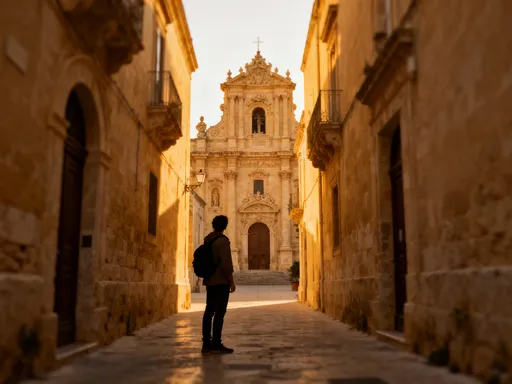
Sicily’s architecture is like nothing I’ve ever seen—layers of history stacked like ancient stone pancakes. But here’s the real talk: without knowing what to look for, it’s easy to walk right past the magic. I almost skipped a quiet street in Noto, thinking it was just another pretty lane—until I turned a corner and found a baroque church that took my breath away. This island doesn’t shout its beauty; it whispers. And if you’re not careful, you’ll miss it completely.
First Impressions Can Be Deceiving: The Quiet Streets of Noto
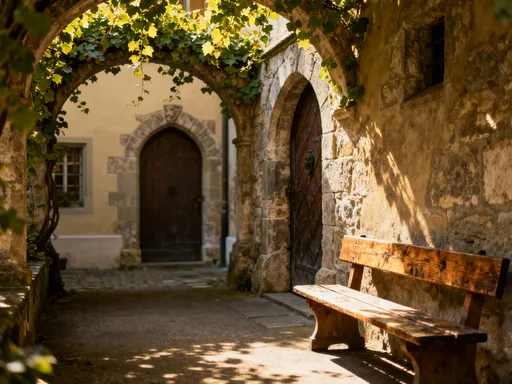
Noto, a UNESCO World Heritage site nestled in the southeastern corner of Sicily, is often described as the crown jewel of Sicilian Baroque. Yet, its true character isn’t found in postcard-perfect snapshots of the Cathedral of San Nicolò, but in the subtle details hidden just off the main thoroughfares. Many travelers arrive with a checklist in hand, ticking off the major landmarks before moving on. But the soul of Noto lives in the silence between the stones, in the quiet alleys where sunlight filters through arched windows and carvings of cherubs peek from above doorways.
The city was rebuilt after the devastating 1693 earthquake that flattened much of southeastern Sicily. Architects of the time used the disaster as an opportunity to redesign entire towns in the grand, theatrical style of the Baroque. Noto became a masterpiece of urban planning—its streets laid out in a precise grid, ascending a gentle hill like a staircase to heaven. The limestone used in construction, quarried locally, gives the city a warm, honeyed glow, especially at dawn and dusk. This radiant hue is not merely aesthetic; it reflects the deep connection between the land and its people, a harmony of material and memory.
Yet, most visitors confine their exploration to Corso Vittorio Emanuele, the central spine of the city. They admire the grand facades of Palazzo Ducezio and the Church of San Domenico, then move on. What they miss are the intimate courtyards tucked behind iron gates, the spiral columns that twist like strands of DNA, and the faded frescoes barely visible beneath layers of time. These elements are not accidents of design—they are deliberate expressions of a culture that valued artistry in every corner, even where no tourist would ever see.
One such moment of discovery happened when a local baker, noticing my lingering gaze at an unmarked doorway, invited me inside his family’s ancestral home. Behind the modest entrance lay a private courtyard adorned with hand-painted tiles and a fountain carved from volcanic rock. He explained that many of these homes have been in families for generations, their beauty preserved not for public acclaim, but as a quiet inheritance. This is the essence of Noto: architecture not as spectacle, but as lived experience. The lesson is clear—slow down, wander without a map, and let curiosity guide your steps. The most unforgettable moments in Sicily are rarely found on itineraries.
Palermo’s Chaos and Charm: Where History Collides
Palermo, the capital of Sicily, does not welcome you with quiet elegance. It roars to life in a symphony of scooter horns, sizzling street food, and laundry flapping between centuries-old buildings. At first glance, the city may seem overwhelming—its streets cluttered, its facades crumbling, its energy relentless. But within this apparent disorder lies one of the most architecturally rich cities in the Mediterranean. Palermo is not a museum piece; it is a living, breathing collage of civilizations, each layer adding depth to the next.
The city’s architectural identity is the result of centuries of conquest and coexistence. Phoenicians, Romans, Byzantines, Arabs, Normans, and Spaniards all left their mark, creating a city where a mosque-inspired arch might sit beside a Gothic cathedral, or a Renaissance palace might hide a Moorish courtyard. The Norman Palace, for instance, began as an Arab emir’s residence and was later transformed into a royal seat by the Normans. Its Palatine Chapel, adorned with shimmering gold mosaics, is a breathtaking fusion of Western, Byzantine, and Islamic art. The ceiling, painted with Arabic inscriptions and Islamic motifs, stands in quiet harmony with Christian iconography—a rare testament to cultural synthesis.
Yet, many tourists, overwhelmed by the city’s intensity, retreat into structured tours that only skim the surface. They visit the Teatro Massimo, snap photos at the Quattro Canti, and leave without venturing into the historic quarters of Kalsa or Vucciria. These neighborhoods, though less polished, offer a more authentic glimpse into Palermo’s architectural soul. In Kalsa, narrow alleys wind past restored palazzi and forgotten churches, some still wrapped in scaffolding, others repurposed into art studios or community centers. The blend of decay and renewal tells a story of resilience, of a city that refuses to be defined by its past alone.
The key to appreciating Palermo’s architecture is to pause—literally and figuratively. Stand still in a quiet piazza, look up at the balconies stacked like wedding cakes, and notice the ironwork that curls like vines. Observe how sunlight dances across a cracked stucco wall, revealing traces of frescoes beneath. These moments of stillness allow the city’s layered history to unfold. Architecture here is not static; it is in constant conversation with time, with people, with memory. To see it fully, one must embrace the chaos, not flee from it.
The Temple of Segesta: Beauty in Isolation
While the Valley of the Temples in Agrigento draws thousands daily, the Temple of Segesta remains a sanctuary of solitude. Perched on a hilltop in western Sicily, surrounded by wild thyme and golden grasses, it stands incomplete—its columns rise from the earth, but no roof was ever added, no walls enclosed its space. Built in the 5th century BCE by the Elymians, a people whose origins remain mysterious, the temple was likely never used for worship. And yet, its presence is profoundly spiritual.
What makes Segesta so moving is not its scale or ornamentation, but its isolation. Unlike other ancient sites, it is not surrounded by crowds, ticket booths, or reconstructed walkways. You arrive after a winding drive through olive groves and abandoned farmhouses, the journey itself becoming part of the experience. As you climb the final steps, the temple emerges like a mirage—perfect in proportion, serene in its abandonment. The Doric columns, twenty-four in total, stand in a flawless circle, their fluted shafts glowing in the afternoon light.
Many visitors, accustomed to more elaborate ruins, might dismiss Segesta as “unfinished” or “simple.” But its power lies in what it lacks. Without distractions, the mind is free to imagine—what rituals might have been planned here? Who carved these stones with such precision? Why was construction halted? The silence invites reflection, not explanation. Archaeologists believe the temple was left incomplete due to war or shifting political alliances, but its incompleteness has become its greatest strength. It is not a monument to completion, but to possibility.
The site also includes a well-preserved ancient theater nearby, carved into the hillside with panoramic views of the Mediterranean. Few tourists make the short hike up, preferring to linger at the temple. But the theater, with its perfect acoustics and sweeping vistas, offers another dimension of ancient ingenuity. Together, these structures remind us that architecture is not only about function, but about vision. Segesta does not demand attention—it earns it through stillness, through the quiet dignity of stone that has outlasted empires.
Mistaking Modern Renovations for Authenticity
In popular destinations like Taormina and Ortigia, the line between restoration and reinvention has become increasingly blurred. Charming old buildings with weathered facades are often transformed into luxury hotels, boutique shops, or rooftop restaurants. To the casual observer, they appear historic—beautifully maintained, rich in character. But step inside, and the illusion may fade. Original floors replaced with imported marble, hand-carved wooden doors swapped for modern replicas, and centuries-old courtyards paved over for seating areas—these changes may enhance comfort, but they strip away authenticity.
The issue is not modernization itself, but the loss of craftsmanship. True Sicilian architecture is defined by its imperfections—walls that lean slightly, tiles laid in irregular patterns, ceilings with hand-painted beams that tell stories of saints and seasons. These details are not flaws; they are signatures of the artisans who built them, each piece shaped by hand, not machine. When developers prioritize aesthetics over integrity, they create spaces that look old but feel hollow.
Travelers can learn to recognize genuine craftsmanship by paying attention to materials and details. Authentic stonework will show tool marks, variations in texture, and natural aging. Original tile floors, especially in inland towns like Caltagirone, often feature geometric patterns in earthy reds and ochres, made using traditional kilns. Asymmetrical layouts—rooms that don’t quite align, staircases that turn unexpectedly—are not design errors, but reflections of organic growth over centuries.
The challenge for visitors is to look beyond the surface. A beautifully lit courtyard with imported furniture may be Instagram-worthy, but it lacks the soul of a family-run guesthouse where the owner points out the 18th-century well in the basement or the fresco fragment uncovered during renovation. Supporting accommodations and businesses that prioritize preservation helps sustain Sicily’s architectural heritage. It also enriches the travel experience, turning a stay into a dialogue with history.
Underestimating the Rural Churches of the Interior
While coastal towns draw the crowds, the heart of Sicily’s architectural treasure lies inland, in small towns often bypassed by tour buses. Caltagirone, famous for its ceramics, is home to the Church of Santa Maria del Monte, its staircase adorned with 142 hand-decorated tile steps, each depicting a different pattern or symbol. Piazza Armerina boasts the Church of San Michele Arcangelo, with a striking Norman portal and a bell tower that rises like a sentinel over the town. These churches are not mere relics—they are active centers of community life, their doors opening for feast days, weddings, and quiet prayer.
Yet, their irregular opening hours and lack of signage make them easy to overlook. A traveler might arrive at noon, find the door locked, and assume the site is closed for good. But a five-minute conversation with a local shopkeeper or a nun at a nearby convent can lead to an unexpected invitation. I once stood outside the Church of San Cataldo in Canicattì, disappointed by the locked gate, when an elderly woman emerging from a side door gestured for me to follow. She unlocked the chapel, lit a single candle, and let me stand in silence before a 17th-century altarpiece depicting the Virgin and Child—its colors still vibrant, its gold leaf catching the light.
Inside these rural churches, the artistry is staggering. Domes painted with celestial scenes, side chapels lined with carved wooden saints, and floors inlaid with volcanic stone create spaces of profound beauty. Unlike the grand cathedrals of Palermo or Monreale, these sanctuaries retain an intimacy, a sense of sacred quiet. They are not designed for mass tourism, but for contemplation.
Visiting them requires flexibility and humility. Check local times when possible, but also be prepared to ask for help. A simple “Scusi, quando apre la chiesa?” can open more than a door—it can open a connection. These moments of human interaction often become the most memorable parts of a journey, transforming sightseeing into meaningful exchange.
Getting Lost in Translation: Misreading Architectural Styles
Sicily’s architecture is a visual language, and like any language, it must be learned. Without context, it’s easy to misinterpret what you’re seeing. A pointed arch might be mistaken for Gothic, when in fact it reflects Arab influence. A dome shaped like an onion could be seen as Byzantine, but it may carry Ottoman inspiration. The island’s buildings are not pure examples of any single style—they are hybrids, born of centuries of cultural exchange.
Understanding these influences begins with observation. Arab architecture, for instance, often features horseshoe arches, intricate stucco work, and courtyards with fountains—elements designed for cooling and privacy. Norman buildings blend Latin basilica forms with Byzantine domes and Islamic decorative patterns, creating a unique fusion visible in churches like the Martorana in Palermo. Spanish rule introduced wrought-iron balconies, tile roofs, and ornate facades, while Baroque architects emphasized drama, movement, and emotional intensity through curved lines and sculptural detail.
You don’t need to be an expert to appreciate these differences. Start by asking simple questions: What shape are the arches? Are there mosaics or frescoes? Is the layout symmetrical or irregular? Over time, patterns emerge. You begin to see how a single building can tell multiple stories—of conquest, coexistence, adaptation. Architecture becomes not just something to look at, but a way to understand Sicily’s complex identity.
This awareness transforms the travel experience. Instead of seeing a church as “old and pretty,” you start to recognize it as a living timeline, a record of who lived here, who ruled, who prayed. It fosters a deeper respect for the island’s resilience and creativity. And it reminds us that beauty is not just in the eye of the beholder, but in the layers of history that shape what we see.
The Right Way to Explore: Slow, Curious, and Open
The greatest mistake travelers make in Sicily is treating it like a checklist. “See the cathedral, photograph the square, eat arancini, move on.” This approach may cover ground, but it misses the essence of the island. Sicily rewards slowness. It asks for presence, for patience, for a willingness to be surprised. The most profound architectural discoveries often come not from guided tours, but from moments of serendipity—a conversation with a shopkeeper, a wrong turn down a narrow alley, a coffee sipped while watching light shift across a church façade.
Planning a flexible itinerary is essential. Instead of packing every hour with visits, allow time for wandering. Spend an afternoon in a single neighborhood. Sit in a piazza and observe how the architecture interacts with daily life—how shutters open to reveal flower boxes, how bells call people to prayer, how shadows lengthen across stone steps. These moments build a deeper connection to place.
Local guides, when chosen wisely, can be invaluable. Seek out those who are passionate about history and culture, not just those who recite facts. A good guide doesn’t just point out features—they tell stories, share personal memories, and help you see beyond the surface. But even without a guide, curiosity is your best tool. Look up, look closely, ask questions. Knock on a door if it’s open. Smile, say “grazie,” and let the island welcome you in its own time.
Technology can support this approach. Use apps to identify architectural styles or translate inscriptions, but don’t let screens replace observation. A camera is useful, but so is memory. Sometimes, the best way to preserve a moment is to simply stand in it, letting the weight of centuries settle around you.
Conclusion
Sicily’s architecture is not just about monuments—it is about memory etched in stone, about the quiet persistence of beauty through war, earthquake, and time. The real journey is not in ticking off landmarks, but in learning to see with patience and wonder. When you stop rushing, the island begins to speak—in the curve of a staircase, the glint of a mosaic, the silence of an ancient temple. It speaks of resilience, of creativity, of a people who have built and rebuilt, again and again. And once you hear it, you’ll never look at travel the same way again. The beauty of Sicily is not in being seen—it’s in being felt.