Why Slowing Down in Mount Cook Reveals Its True Magic
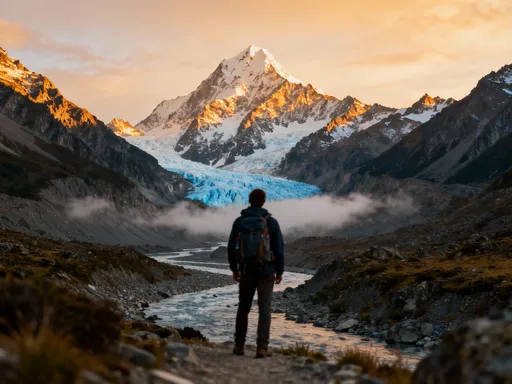
You know that feeling when you're constantly chasing sunsets, ticking off trails, and rushing to the next viewpoint? I used to travel like that—until I hit pause in Mount Cook, New Zealand. This isn’t a place to sprint through. It’s a sanctuary where time bends, glaciers glow under alpenglow, and silence speaks louder than any guidebook. Slow travel here isn’t just an option—it’s the only way to truly feel the pulse of the Southern Alps. In a world that glorifies speed and efficiency, Mount Cook offers a rare invitation: to stop, breathe, and let the landscape speak. Here, the mountain doesn’t perform for tourists; it reveals itself only to those willing to listen. And listening, as it turns out, requires time, patience, and presence.
The Allure of Slowness in a Wild Landscape
Mount Cook, known in Māori as Aoraki, meaning 'cloud piercer,' rises dramatically to 3,724 meters, making it the tallest peak in New Zealand. Located in the heart of the South Island within Aoraki / Mount Cook National Park, this majestic mountain is more than a geological wonder—it is a sacred site for the Ngāi Tahu people and a symbol of natural resilience. The entire region, part of the UNESCO World Heritage-listed Te Wahipounamu area, is protected for its ecological and cultural significance. To visit Aoraki is not simply to witness a mountain, but to enter a space where nature operates on its own terms, indifferent to human schedules.
Slow travel, in this context, is not a passive choice but an active commitment to depth over speed. It means resisting the urge to 'see everything' in a single day and instead allowing oneself to be fully present in one place. Unlike checklist tourism, which measures success by the number of attractions visited, slow travel values quality of experience. It is about noticing the subtle shift in light as the sun grazes the snowfields, hearing the distant crack of a glacier calving, or feeling the crisp alpine air fill your lungs at dawn. These are not moments easily captured in photos, but they are the ones that linger in memory.
The alpine environment of Mount Cook demands this slower rhythm. Weather changes rapidly—clear skies can give way to blizzards within hours. Trails may be closed due to snow or rockfall. The altitude affects energy levels, making long hikes more challenging. These are not obstacles to overcome, but reminders that nature sets the pace. When travelers accept this, they begin to align with the mountain’s own tempo. The vastness of the landscape, the scale of the peaks, and the depth of silence all encourage introspection. In such a setting, rushing feels not only futile but disrespectful. The true magic of Aoraki reveals itself not to the hurried, but to those who are willing to wait.
The Village – Gateway to Presence
Mount Cook Village, a small settlement nestled beside the turquoise waters of Lake Pukaki, serves as the primary gateway to the national park. With a permanent population of fewer than 200 people, the village is intentionally modest. There are no traffic lights, no shopping malls, and no chain restaurants. Instead, visitors find family-run lodges, a visitor center, a small café, and a sense of quietude that feels increasingly rare in the modern world. This simplicity is not a limitation—it is the foundation of presence. Without the distractions of urban life, attention naturally turns inward and outward, toward both self and surroundings.
Accommodations in the village are designed to foster connection rather than convenience. Many lodges are operated by multi-generational families who have lived in the region for decades. Their stories, shared over breakfast or evening tea, offer a deeper understanding of the land’s history, weather patterns, and seasonal rhythms. Some lodges host informal stargazing talks, where guests gather after dinner to learn about the night sky from local astronomers. These moments of shared knowledge create a sense of community, even among strangers. The absence of mobile phone signal in many areas further encourages unplugging and engagement with the present moment.
Cafés and dining spaces in the village are intentionally unhurried. Seating is often arranged to face the mountain, inviting guests to linger over coffee while watching the light change on the peaks. Meals are made with local ingredients—alpine honey, free-range lamb, and seasonal vegetables—served with care rather than speed. There is no pressure to turn over tables. This deliberate pace extends to daily routines: guests are encouraged to take walks around the village, journal by the lake, or simply sit and observe. By limiting movement and reducing stimulation, the village creates the ideal conditions for mindfulness. It is not about doing less, but about noticing more. In this way, the village becomes not just a place to sleep, but a teacher of presence.
The Trails – Rhythm of the Footsteps
The walking tracks around Mount Cook are among New Zealand’s most celebrated, and for good reason. The Hooker Valley Track, a flat, well-maintained path stretching just over ten kilometers round-trip, is often highlighted in travel guides. It features swing bridges, glacial rivers, and panoramic views of Aoraki itself. But the true value of this trail—and others like the Kea Point or Sealy Tarns tracks—lies not in completing it, but in returning to it. When walked repeatedly, the same path becomes a mirror, reflecting not just the landscape, but the traveler’s own shifting awareness.
Walking the Hooker Valley Track at dawn reveals a world in transition. The air is still, the shadows long, and the first light paints the snowfields in soft pink and gold. Mist rises from the river, and the only sounds are the crunch of gravel underfoot and the distant call of the kea, New Zealand’s alpine parrot. By midday, the scene transforms. The sun glints off the icebergs floating in Hooker Lake, and the trail fills with hikers, their voices echoing across the valley. Then, at dusk, the mountain glows under alpenglow, and the sky deepens into shades of violet and indigo. Each visit offers a different sensory experience, a different emotional tone.
Repetition builds intimacy. On the first walk, attention may be drawn to the grand vistas. By the third or fourth time, the eyes begin to notice smaller details: the pattern of lichen on a rock, the way light filters through the tussock grass, the slow drift of clouds across the summit. This deep observation is not possible when rushing from one trail to the next. It requires time and stillness. The Māori concept of 'whakawhanaungatanga'—building relationships through shared time and experience—applies not only to people but to place. By returning to the same trail, travelers form a bond with the land, one that transcends tourism and becomes something more personal, more meaningful.
The Sky – Night After Night Under the Stars
Mount Cook is one of the best places in the world for stargazing, designated as part of the Aoraki Mackenzie International Dark Sky Reserve—one of the largest such reserves globally. Light pollution is nearly nonexistent, thanks to strict regulations on outdoor lighting in the region. On a clear night, the Milky Way arcs across the sky with breathtaking clarity, and thousands of stars become visible to the naked eye. But the real wonder lies not in a single night’s view, but in the practice of watching over time.
Each evening offers a different celestial display. On nights when the moon is full, its light bathes the snowfields in silver, creating an ethereal glow across the landscape. During the new moon, the darkness is profound, and the stars appear brighter, more numerous. With patience, one might witness a meteor shower, such as the annual Perseids in August, when streaks of light flash across the sky. But these events are not about capturing the perfect photograph. They are about sitting in silence, feeling small beneath the vastness of the universe, and allowing the mind to quiet.
Local guides often emphasize that the best stargazing happens not on the first night, but on the third or fourth. By then, the eyes have adjusted not just to the darkness, but to the rhythm of the place. Familiarity allows for deeper observation—recognizing constellations, noticing planetary movements, or simply appreciating the stillness. Some visitors bring journals to record their observations, not for scientific accuracy, but as a way to anchor their experience. The act of watching the sky night after night becomes a meditation, a reminder of the slow, cyclical nature of time. In a world obsessed with speed and immediacy, the stars offer a different lesson: that some of the most profound experiences come not from doing, but from being.
The Glacier – Watching Ice Breathe
The Tasman Glacier, stretching over 27 kilometers, is the longest glacier in New Zealand. It flows from the slopes of Aoraki down into the valley, where it terminates in Tasman Lake, a milky-blue body of water filled with icebergs. From a distance, it may appear static, a frozen river of ice. But those who spend time observing it begin to sense its movement, its breath. Crevasses open and close, icebergs break off with a deep, resonant crack, and meltwater streams shift their paths daily. This is not a landscape frozen in time, but one in constant, slow transformation.
Guided glacier walks and boat tours on Tasman Lake offer safe, informative ways to experience the ice up close. On a glacier walk, visitors wear crampons and follow a guide across the snowfield, learning to identify features like seracs, moulins, and moraines. The experience is not about conquering the glacier, but about understanding it. Guides often pause to explain how the ice formed over centuries, how it moves at a rate of about 70 centimeters per day, and how climate change is accelerating its retreat. These conversations ground the experience in science while deepening emotional connection.
Boat tours on Tasman Lake provide a different perspective. As the vessel glides among icebergs—some as small as chairs, others as large as houses—passengers can hear the ice groaning and popping as it melts. The sounds are otherworldly, a reminder that this is a living system. Some icebergs glow with an intense blue hue, caused by compressed air bubbles in the ancient ice. Observing these details over time fosters a sense of awe and responsibility. Slow travel, in this context, becomes a form of environmental empathy. When people spend days watching a glacier change, they are more likely to understand the urgency of climate action. The glacier does not preach; it simply shows. And those who take the time to watch, listen, and feel, carry that lesson with them long after they leave.
Practical Slow Travel: How to Structure Your Stay
To fully embrace slow travel in Mount Cook, planning is essential. Experts recommend staying for at least three to five nights, allowing time to acclimate and settle into the rhythm of the place. Choosing a single base, such as Mount Cook Village, minimizes logistical stress and maximizes immersion. Rather than packing the itinerary with activities, travelers are encouraged to limit themselves to one or two outings per day, leaving ample time for rest, reflection, and spontaneous moments.
A simple daily routine can enhance the experience. Starting the day with coffee on a balcony facing Aoraki allows for quiet observation of the morning light. Midday might include a walk, a visit to the visitor center, or time spent reading about the region’s natural history. Afternoons can be dedicated to journaling, sketching, or simply sitting by the lake. Evenings are best spent unplugged—no screens, no distractions—engaging in conversation, stargazing, or listening to the wind. These small rituals create a sense of continuity and depth that is often missing in fast-paced travel.
Getting to Mount Cook requires some advance planning. Most international visitors fly into Christchurch, on the east coast of the South Island. From there, a scenic drive along State Highway 8 takes about four hours, passing through the Mackenzie Basin, with its golden tussock plains and views of the Southern Alps. Alternatively, shuttle services operate from Queenstown and Twizel, offering comfortable transport with knowledgeable drivers who share local insights. Rental cars are available, but winter driving conditions can be challenging due to snow and ice, so checking weather forecasts and road conditions is advisable. Once in the village, everything is within walking distance, eliminating the need for a car during the stay.
Conclusion: Carrying the Pace Beyond the Peaks
Slowing down in Mount Cook is not just a travel strategy—it is a transformation. The mountain does not change, but the traveler does. After several days of quiet observation, many report a shift in perception: colors seem brighter, sounds clearer, thoughts calmer. The constant mental chatter that defines modern life begins to quiet. In its place arises a deeper awareness, a sense of connection to something larger than oneself. This is the gift of slow travel: not just memories of a beautiful place, but a renewed way of being.
The stillness of Aoraki teaches that presence is not passive, but powerful. It is in stillness that we hear the subtle messages of nature—the wind, the ice, the stars. It is in stillness that we reconnect with our own inner voice. And it is in stillness that we remember what truly matters. The lessons learned in the alpine silence do not end when the journey does. They travel with us, influencing how we move through cities, interact with loved ones, and approach daily life. Slowing down in Mount Cook is not an escape from the world, but a way of returning to it—with greater clarity, compassion, and intention.
So the next time you plan a trip, consider not how far you can go, but how deeply you can go. Seek out places that invite stillness, that resist the urge to perform. Let landscapes like Aoraki teach you the power of presence. Because in the end, the most meaningful journeys are not measured in kilometers, but in moments of wonder, in quiet realizations, in the slow unfolding of the soul. That is the true magic of Mount Cook—and the lasting gift of slow travel.