You Won’t Believe What’s Hiding in Koror’s Art Spaces
I didn’t expect to find so much creativity in a tropical paradise. Koror, Palau isn’t just about turquoise waters and jungle cliffs—its vibrant art spaces tell stories of culture, resilience, and identity. From bold murals on concrete walls to hand-carved sculptures in quiet courtyards, I discovered a side of Palau most travelers miss. This is exploration at its most authentic. While many come for the diving, the sunsets, and the island-hopping adventures, few realize that beneath the surface of this Pacific gem lies a quietly thriving artistic spirit. It doesn’t announce itself with billboards or glossy brochures. Instead, it reveals itself in quiet moments—a pattern etched into a wooden post, a mural tucked behind a fruit stand, a conversation with a local who speaks of art as memory, resistance, and hope. This is not art made for export. It is art rooted in place, in people, and in purpose.
Reimagining Koror: Beyond Beaches and Blue Waters
Koror, the most populous state in the Republic of Palau, is often seen as a gateway to the country’s natural wonders. Travelers pass through on their way to snorkel the Rock Islands, kayak through Jellyfish Lake, or hike through lush rainforests. Yet, the city itself holds a cultural richness that defies the typical island tourism narrative. Beyond the resorts and ferry docks, Koror is a living urban center where tradition and modernity intersect in unexpected ways. This is especially evident in its growing art scene, which has evolved quietly but steadily over the past two decades. Unlike the curated exhibits of capital-city museums or the souvenir-lined stalls of tourist markets, Koror’s art spaces emerge organically—often in places one wouldn’t expect: beside roadside eateries, in school courtyards, or on the sides of aging concrete buildings.
What makes this shift significant is that it reflects a broader change in how Palauans are choosing to present their identity. For years, tourism in Palau has been marketed through its environmental beauty—its reefs, its skies, its untouched landscapes. While these remain vital, there is a growing recognition that culture is equally worth sharing. The art spaces in Koror are not separate from this natural beauty; they are deeply connected to it. Artists draw inspiration from the sea, the forest, and ancestral stories passed down through generations. But instead of presenting these elements as static relics, they are reimagined in dynamic, contemporary forms. A mural might depict a traditional navigation chart, but rendered in vibrant spray paint across a city wall. A sculpture may echo the shape of a bul, the traditional meeting house, but carved with modern tools and displayed in a public park.
This blending of old and new is not accidental. It is intentional—a way for younger generations to assert their identity in a globalized world while staying grounded in their heritage. The urban landscape of Koror, often overlooked for its lack of postcard perfection, becomes a canvas for this expression. Graffiti is not seen as vandalism here but as a form of storytelling. A weathered wall is not just a barrier but a potential gallery. This reimagining invites travelers to look beyond the expected, to slow down, and to engage with Palau not just as a destination but as a living, breathing community.
The Rise of Urban Canvas: Street Art with a Story
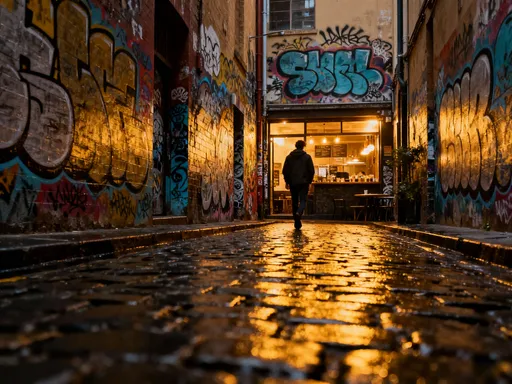
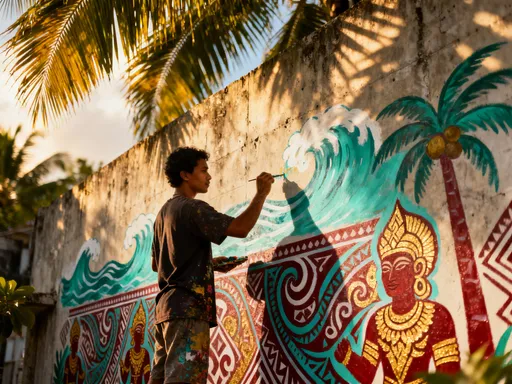
Street art in Koror is not about rebellion in the Western sense. It is not about defiance for defiance’s sake. Instead, it is rooted in narrative, in education, and in cultural pride. Murals across the city serve as visual histories, illustrating myths, customs, and contemporary issues in bold, accessible ways. One striking example is a large-scale painting near the central market depicting the journey of Palauan voyagers using traditional wayfinding techniques—reading the stars, the waves, and the flight patterns of birds. The image is both artistic and instructive, reminding viewers of a sophisticated maritime tradition that predated modern navigation tools.
Other murals address pressing concerns such as climate change and environmental protection. Rising sea levels pose a real threat to low-lying atolls in the Pacific, and Palauan artists are not silent on this issue. A powerful piece on the side of a community center shows a child standing at the edge of a shoreline, holding a coral branch while waves encroach behind. The message is clear: the future of Palau is tied to the health of its oceans. These artworks are not commissioned by government tourism agencies but often initiated by local schools, youth groups, or environmental nonprofits. They emerge from the community, for the community, and serve as both warning and call to action.
The visual language of these murals blends traditional patterns with modern techniques. Geometric designs inspired by belau (traditional Palauan patterns) are integrated into larger compositions, creating a sense of continuity between past and present. Artists use bright, durable paints to withstand the tropical climate, ensuring that their messages endure through sun and storm. What is most striking is how seamlessly these murals become part of daily life. Commuters pass them on their way to work. Children play beneath them. Shop owners proudly point them out to visitors. The art is not isolated—it is woven into the fabric of the city, transforming mundane spaces into sites of meaning and memory.
Hidden Galleries and Community Studios
While Koror may not have large, formal art museums, it is home to a network of small, independent galleries and studios that function as cultural hubs. These spaces are often unmarked, with no signage or online presence, making them invisible to the average tourist. Yet, for those who seek them out, they offer some of the most authentic cultural experiences in Palau. One such studio, located just off the main road near a local market, operates out of a converted bungalow. Inside, rotating exhibitions feature paintings, textiles, and mixed-media works by Palauan artists, many of whom studied abroad and returned with a renewed commitment to their roots.
These studios are more than exhibition spaces—they are centers of learning and collaboration. Some offer workshops for youth in traditional crafts such as weaving, carving, and natural dyeing. Others host visiting artists from neighboring Pacific islands, fostering regional dialogue and exchange. One studio I visited had a weekly open session where locals and visitors alike could try their hand at painting traditional motifs under the guidance of an elder artist. The atmosphere was warm and inclusive, with no pressure to produce a masterpiece—only an invitation to participate.
What sets these spaces apart is their accessibility. Unlike formal galleries, which can feel intimidating or exclusive, these community studios welcome everyone. A mother might bring her child after school. A fisherman might stop by on his way home. A traveler might wander in by chance and leave with a deeper understanding of Palauan life. The art on display is not polished for international markets; it is raw, personal, and often deeply symbolic. A painting might depict a family’s fishing tradition, passed down for generations. A woven mat might incorporate colors that represent different clans. These works are not just objects—they are vessels of identity.
Sculpture in the Open Air: Nature and Craft Intertwined
In Koror, sculpture is not confined to galleries or private collections. It lives in the open air, integrated into the urban and natural landscape. Wooden carvings stand sentinel outside cafes, government buildings, and schools, their surfaces smoothed by rain and touched by sunlight. Stone sculptures rest in public parks, often surrounded by native plants and creeping vines. These works are not merely decorative—they are deeply symbolic, reflecting stories from Palauan cosmology and social structure.
One recurring motif is the story of Uab, the first Palauan, who, according to legend, was formed from the earth and given life by the gods. Sculptures depicting Uab often show a seated figure with hands resting on knees, eyes closed in contemplation. These figures are not idealized but grounded, their forms echoing the strength and simplicity of the land itself. Another common theme is the bul, the traditional meeting house where community decisions are made. Carvings of the bul serve as reminders of collective wisdom and the importance of dialogue.
What is remarkable is how these sculptures coexist with nature. Tree roots grow around their bases, integrating art and ecology. Rainwater pools in carved grooves, creating temporary reflections. Birds perch on outstretched arms. There is no attempt to preserve them behind glass or fences. Instead, they are allowed to weather, to change, to become part of the environment. This reflects a broader cultural philosophy—one that values impermanence, adaptation, and harmony with nature. For visitors, encountering these sculptures is a moment of quiet revelation. They are not monuments to be admired from a distance but companions in daily life, witnesses to the rhythm of the city.
How to Find These Art Spaces Without a Map
One of the most enchanting aspects of Koror’s art scene is that it cannot be fully mapped. There is no official art trail, no numbered guidebook, no tourist shuttle route. This absence of formal structure is not a limitation—it is part of the experience. Finding these spaces requires curiosity, openness, and a willingness to engage with locals. The best way to begin is simply to ask. A friendly question at a coffee stand—“Where do artists gather?” or “Who made that carving by the school?”—can lead to unexpected discoveries.
Many of the most vibrant art spaces are shared through word of mouth. A schoolteacher might mention a weekend market where young painters sell their work. A taxi driver might point out a mural hidden behind a repair shop. A shopkeeper might invite you to view a private collection stored in the back room. Social media also plays a growing role. While not all artists have websites, many are active on platforms like Facebook and Instagram, where collectives post updates about exhibitions, workshops, and pop-up events. Hashtags like #PalauArtScene and #KororCreatives are slowly gaining traction, offering digital breadcrumbs for those who know where to look.
Walking is the best way to explore. The city is compact enough to navigate on foot, and the act of wandering allows for serendipitous encounters. A side street might reveal a brightly painted wall. A quiet courtyard might hold a sculpture garden. A community center might have a bulletin board advertising an upcoming art class. The key is to move slowly, to look up and down, and to resist the urge to rush from one landmark to the next. In Koror, the most meaningful discoveries are often the ones you don’t plan for.
Why These Spaces Matter: Culture as Living Expression
The art spaces of Koror are more than aesthetic additions to the city—they are acts of cultural resilience. In an era of rapid globalization, climate change, and cultural homogenization, they represent a deliberate effort to preserve and renew Palauan identity. For many artists, creating is not just a personal pursuit but a responsibility. They see themselves as custodians of knowledge, using their work to pass down stories, values, and skills to younger generations.
What makes this especially powerful is that the art is not frozen in time. It does not seek to replicate the past exactly as it was. Instead, it evolves, incorporating modern materials, techniques, and themes while staying rooted in tradition. A young painter might use acrylics to depict a creation myth. A sculptor might combine reclaimed wood with metal elements to comment on sustainability. This dynamic approach ensures that culture remains relevant, alive, and accessible.
Supporting these artists is not just about purchasing a souvenir. It is about participating in a larger movement of cultural continuity. When a traveler buys a painting directly from the artist, they are not just acquiring an object—they are affirming the value of that person’s voice, their vision, their heritage. When a child learns to weave from an elder in a community workshop, they are not just learning a craft—they are inheriting a worldview. These spaces matter because they keep the culture breathing, adapting, and growing.
How Travelers Can Engage Respectfully and Meaningfully
Visiting Koror’s art spaces offers a rare opportunity for authentic connection, but it must be approached with care and respect. These are not performance spaces designed for tourist consumption. They are part of everyday life, often deeply personal and community-oriented. The goal should not be to “discover” or “claim” something exotic, but to listen, learn, and contribute in a positive way.
One of the simplest yet most important practices is to ask permission before taking photographs, especially of people or sacred symbols. While many artists are happy to share their work, some pieces carry spiritual or familial significance that should not be captured casually. Taking time to speak with artists—asking about their process, their inspiration, their community—can transform a brief encounter into a meaningful exchange. Even a few minutes of conversation can deepen understanding and build mutual respect.
When possible, purchasing art directly from the creator is the most impactful way to support the scene. A small print, a hand-carved pendant, or a woven bracelet may cost little, but it makes a real difference. Unlike mass-produced souvenirs, these items carry stories and intention. Some studios also welcome volunteers or short-term participants in workshops, offering hands-on learning experiences. These opportunities are not always advertised, so expressing genuine interest can open doors.
Ultimately, respectful engagement means recognizing that culture is not a commodity. It is a living, evolving expression of identity. Travelers who approach Koror’s art spaces with humility, curiosity, and an open heart will find not just beauty, but connection.
Koror’s art spaces reminded me that travel is more than sightseeing—it’s about seeing deeper. Beneath the postcard views lies a creative heartbeat, pulsing with pride and purpose. To explore these spaces is to witness Palau not just as a destination, but as a community shaping its future, one brushstroke at a time. The murals, the sculptures, the hidden studios—they are not side attractions. They are the soul of the island, speaking in colors, forms, and textures that words cannot fully capture. And for those willing to look beyond the surface, they offer a journey not just across geography, but into the heart of what it means to belong.